Interview with Eye of TJ about his single “Letting Go of You”
Con el lanzamiento de “Letting Go of You (Acoustic Version)”, Eye of TJ vuelve a una de las canciones más importantes de su recorrido, pero desde otro lugar. Lejos del impacto del rock eléctrico de la versión original, esta nueva lectura pone el foco en el silencio que queda después de la ruptura.
En esta entrevista, el proyecto detrás de Everything I Didn’t Say habla sobre el origen de esta versión acústica, el peso emocional de revisitar una canción escrita años atrás y cómo encaja dentro de la etapa que se abre camino hacia el Deluxe Edition. Una conversación honesta sobre duelo, cierre y la fuerza que aparece cuando todo se detiene.
1- ¿En qué momento sentiste que “Letting Go of You” pedía una versión acústica?
When did you feel that “Letting Go of You” needed an acoustic version?
ES: “Letting Go of You” fue la base de todo este proyecto. Fue la primera vez que permití que estas historias salieran de mis cuadernos, y la respuesta de la gente fue abrumadora. Escuchar cómo las personas conectaban sus propias vidas con la canción me hizo dar cuenta de que todavía había más capas por descubrir.Hace unos dos meses, cuando Everything I Didn’t Say (Deluxe Edition) empezó a tomar forma, sentí que necesitaba un latido, algo despojado del muro de producción para que las palabras pudieran respirar. Era el momento justo para volver al inicio de la historia, pero con la perspectiva que tengo hoy.
EN: “Letting Go of You” was the foundation of this entire project. It was the first time I allowed these stories to leave my notebooks, and the response from the fans was overwhelming. Hearing how people connected their own lives to the track made me realize the song had more layers to uncover. About two months ago, as the Everything I Didn’t Say (Deluxe Edition) began to take shape, I knew it needed a heartbeat—something stripped of the production wall to let the words breathe. It felt like the right moment to return to where the story began, but with the perspective I have now.
2- Definís la versión original como el “grito” y esta como el “silencio”. ¿Qué emociones o detalles aparecen acá que no tenían lugar en la versión rock?
You describe the original version as the “scream” and this one as the “silence.” What emotions or details show up here that didn’t fit in the rock version?
ES: En la versión rock original, las guitarras distorsionadas y la batería pesada representan el caos de una relación en su punto de quiebre, es la frustración exteriorizada. Pero cuando el grito se termina, aparece un silencio muy específico y pesado. Eso es lo que captura esta versión acústica.Al quitar el “ruido”, se pueden escuchar los matices en la voz: las respiraciones, la aspereza, la vulnerabilidad que muchas veces el enojo esconde. Es la diferencia entre luchar por ser escuchado y sentarse solo con la certeza de que todo terminó.
EN: In the original rock version, the distorted guitars and heavy drums represent the chaotic noise of a relationship at its breaking point—it’s the externalized frustration. But after the screaming stops, there is a very specific, heavy silence that follows. That is what this acoustic version captures. By removing the “noise,” you can finally hear the nuances in the vocal texture—the intakes of breath, the grit, and the vulnerability that anger often hides. It’s the difference between fighting to be heard and finally sitting alone with the realization that it’s over.
3- ¿Cambió tu relación con la letra al volver a cantarla en un formato más simple?
Did your relationship with the lyrics change when you went back to the song in a simpler format?
ES: Cambió profundamente. De forma paradójica, cuanto más simple es el formato, más pesado se vuelve el peso de las palabras. Bajar el tempo me obligó a quedarme con cada sílaba.Me llevó de vuelta al cuaderno original donde estas letras fueron escritas hace años. En la versión rock sentía que estaba corriendo a través del fuego; en la acústica, estoy parado en las cenizas, mirando lo que quedó. Encontré un nuevo cierre en esta interpretación que ni siquiera sabía que todavía estaba buscando.
EN: It changed profoundly. Paradoxically, the simpler the format, the heavier the weight of the words. Slowing the tempo down forced me to sit with every syllable. It took me back to the original notebook where these lyrics were first scratched out years ago. In the rock version, I felt like I was running through the fire; in the acoustic version, I am standing in the ashes looking at what remains. I found a new sense of closure in this performance that I didn’t even realize I was still searching for.
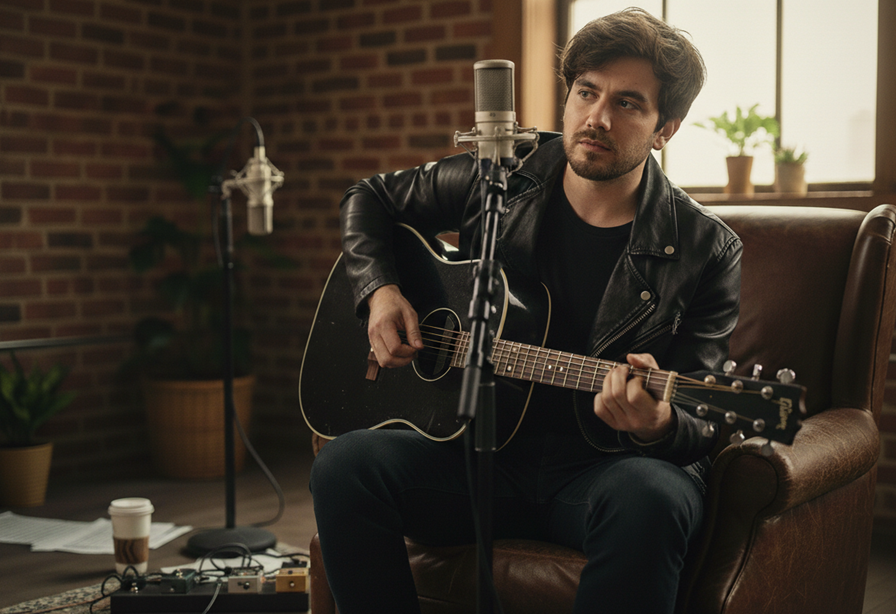
4- Esta versión sale justo antes de San Valentín. ¿La fecha fue una decisión emocional o responde a la lógica del proyecto?
This version comes out just before Valentine’s Day. Was the release date an emotional decision, or more about the logic of the project?
ES: Fue una decisión pensada para la gente. No todos viven la semana de San Valentín celebrando el amor; para muchos es una semana de aislamiento profundo o el aniversario de una pérdida.Quise ofrecer el himno definitivo “anti-San Valentín” para quienes este año están soltando en lugar de aferrarse. Para algunos, será su primer febrero en soledad después de una década. Quería que supieran que hay una fuerza cruda y cinematográfica en esa soledad.
EN: It was a deliberate choice for the fans. Not everyone spends Valentine’s week in a celebration of love; for many, it is a week of profound isolation or the anniversary of a loss. I wanted to provide the ultimate “Anti-Valentine” anthem for the people who are spending this year letting go instead of holding on. For some, this will be their first February alone in a decade. I wanted them to know that there is a raw, cinematic strength in that solitude.
5- ¿Sentís que esta versión refleja mejor el estado emocional en el que fue escrita la canción?
Do you feel this version better reflects the emotional state you were in when the song was written?
ES: Totalmente. Cuando estás sentado en una habitación con solo un cuaderno y una lapicera, no hay un “muro de sonido” detrás del cual esconderse. Esta versión está mucho más cerca de ese primer impulso de honestidad.El formato acústico deja ver a la persona debajo de la armadura. Es la canción en su forma más pura y más “no dicha”.
EN: Absolutely. When you are sitting in a room with just a notebook and a pen, there is no “wall of sound” to hide behind. This version is much closer to that initial spark of honesty. I think this acoustic setting highlights that contrast perfectly. It is the person underneath the armor. This is the song in its purest, most “unspoken” form.
6- ¿Cómo se conecta esta canción con la idea de “the silence after the final word” que atraviesa todo el proyecto?
How does this song connect with the idea of “the silence after the final word” that runs through the whole project?
ES: Eye of TJ es un inventario de momentos no dichos. Ese “silencio después de la última palabra” es el período de reflexión cuando las discusiones terminan y finalmente te enfrentás a vos mismo.Esta canción es la representación sonora de ese instante. Es el sonido de una puerta cerrándose por última vez. No es un silencio vacío, sino uno cargado con el peso de todo lo que quedó sin decir durante nueve años.
EN: The Eye of TJ project is an “inventory of unspoken moments.” The “silence after the final word” is that period of reflection when the arguments have ceased and you are finally forced to face yourself. This song is the auditory representation of that moment. It’s the sound of the door closing for the last time. It’s not a hollow silence; it’s a silence filled with the weight of everything that was left unsaid over nine years.

7- ¿Qué rol cumple esta versión acústica en la nueva etapa rumbo al Deluxe Edition?
What role does this acoustic version play in the new phase leading into the Deluxe Edition?
ES: Funciona como un puente emocional entre dos capítulos. Everything I Didn’t Say hablaba del dolor de la lucha. El Deluxe Edition, especialmente con la canción nueva What Love Should Be, empieza a mover la narrativa hacia la sanación y el amor propio.Si Letting Go of You es el acto de alejarse, What Love Should Be es darse cuenta hacia dónde estás caminando. Esta versión acústica le da al oyente el espacio para procesar el duelo antes de avanzar hacia la fortaleza de un nuevo comienzo.
EN: It serves as the emotional bridge between two chapters. Everything I Didn’t Say was about the pain of the struggle. The Deluxe Edition, specifically with the new track What Love Should Be, starts to shift the narrative toward healing and self-worth. If Letting Go of You is the act of walking away, What Love Should Be is the realization of where you are walking to. This acoustic version allows the listener to process the grief of the ending before we move into the strength of the new beginning.
8- Al escuchar hoy ambas versiones, ¿qué te dice cada una sobre ese momento de tu vida?
Listening to both versions today, what does each one tell you about that moment in your life?
ES: Me muestran mi propia evolución. La versión original es una foto de la tormenta, del enojo, del dolor y del instinto de supervivencia.La versión acústica, en cambio, me dice que finalmente encontré paz con el resultado. Demuestra que todavía se puede sentir la aspereza y la tristeza sin quedar destruido por ellas. Una versión habla del fuego; la otra, de la fuerza necesaria para atravesarlo y salir del otro lado.
EN: They show me my own evolution. The original version is a snapshot of the storm—the anger, the hurt, and the survival instinct. But the acoustic version tells me that I have finally found peace with the outcome. It proves that you can still feel the grit and the heartache without being broken by them. One version is about the fire; the other is about the strength it took to walk through it and come out the other side.
Visita sus cuentas: Facebook, X, Spotify, YouTube, Instagram y TikTok.